
If vLLM already solved LLM serving, why did SGLang appear?

Updated on
Published on
By

Table of Content
About the author

That’s where most retail and manufacturing operations sit today. Not lacking data, but buried in it.
The hard part beyond capturing information is in turning captured information into a decision fast enough to actually change something.
Amit Srivastava, co-founder and CTO of Constems AI, puts it plainly –
“when a major retail brand is generating a million images a day from shelf audits and compliance checks: What do you do? You sit on it. You browse through a few. The rest goes unreviewed. And somewhere in that unreviewed pile is a stockout that’s been running for two days, a promotional display that’s wrong in sixty stores, a quality issue moving down a production line. This is the problem vision AI exists to solve.”
Retail runs on execution. Products are made available when customers want them, promotions displayed correctly, shelves stocked to plan, and brand standards maintained across every location.
In practice, however, there’s always a gap between what the planogram says and what’s actually on the shelf. A promotion that didn’t go up correctly in some stores. A SKU that’s been out of stock longer than the system has caught.
The question isn’t whether these gaps exist – it’s how long they go undetected.
There’s a phrase in Indian retail: jo dikhta hai woh bikta hai (what’s visible sells). The shelf isn’t just a display – it’s a revenue decision. Every hour a product is missing is an hour of sales that won’t come back. Multiply that across hundreds of stores and the number stops being operational and starts being a P&L conversation.
Historically, retailers caught these gaps through audits. Field teams, store visits, summary reports filed weekly or monthly. But by the time an issue surfaced in a report, the window for corrective action had usually already closed.
Real-time vision AI flips that timeline. Shelf compliance, display accuracy, inventory gaps – all flagged continuously from the actual store environment, while action is still possible. Real-time picture, not last week’s analysis.
That kind of continuous inference workload needs infrastructure built to sustain it – which is where Neysa Velocis comes in, handling the throughput that makes real-time image analysis viable at retail scale without latency or cost unpredictability undermining the whole operation.
Manufacturing is the same argument with sharper consequences.
In retail, a gap in execution costs sales. In manufacturing, a gap in quality can cost product lines.
A labeling error, surface defect, or packaging anomaly moving through a production line at speed doesn’t stay isolated. It multiplies through every unit produced before the issue is caught. By the time a periodic inspection surfaces it, the damage is downstream.
Sampling-based quality control works well when defect rates are low and volumes are manageable.
At modern production speeds, with the tolerance levels customers and regulators now expect, it stops being sufficient. You can’t sample your way to confidence when a single overlooked anomaly can mean thousands of affected units.
Continuous vision AI moves the catch earlier. Every unit is reviewed, not just a sample.
But here’s what retail doesn’t make obvious. A system that flags issues around the clock, at production speed, needs more than a good model. It needs controls around what happens when the model keeps triggering.
Run continuous image analysis with infrastructure built for predictable performance and scale.

Constems AI learned this early.
During a factory deployment analyzing hand wash bottle labels for manufacturing date anomalies, the model was doing exactly what it was built to do – flagging every issue it found, every time. While technically correct, what nobody had designed for was what happens when it keeps triggering at high volume with no controls around those flags.
“That’s where we came up with the thought: how do you put guardrails in place? You have to think of all the possible scenarios in the business world.”
The model worked. But the system around it didn’t.
There’s a tradeoff at the heart of every AI stack decision: speed, cost, control. What we like to call the GenAI trilemma. In theory, all three matter. In practice, one gets cut. And it’s almost always control.
“The first thing that goes out the window is control,” Amit says. “People would like to reduce cost, go for speed. But control is the most important factor – even if you’re going a little slower.”
Part of the reason is that AI and human operators don’t catch problems the same way. A person walking a production line who sees something wrong stops on instinct – a blink, not a calculation. AI refuses to work that way. It works on what it’s been trained to detect and keeps going until something tells it to stop. That’s not a limitation to design around. It’s a characteristic to design for. Guardrails aren’t restrictions on what the system can do. They’re what make it trustworthy enough to run at scale.
The same principle plays out differently in retail. A vision AI system flagging shelf compliance issues across 500 stores simultaneously generates a lot of signals. Without governance around how those signals get prioritized, filtered, and acted on, the system creates noise rather than clarity. Getting the output right matters as much as getting the model right.
Most teams discover this later than they should: building the model is the smallest part of the challenge.
“Don’t run after large models,” Amit says. “Build your core AI engine which is actually solving a business problem. It should not be a fancy new feature.” Embedded in a real workflow, doing a defined job reliably – that’s what makes vision AI valuable in retail and manufacturing.
Getting it there means solving for monitoring, version control, performance management, governance, and infrastructure that holds under real operational load. This is where most AI initiatives hit friction – not in the model itself, but in everything around it.
Continuous image processing across retail networks and production lines, inference running fast enough to be actionable, results flowing into operational systems in near-real time – general-purpose clouds weren’t designed for these workloads.
Neysa Velocis equips eCommerce and digital-first retail brands with cloud-native infrastructure to build, scale, and optimize AI features that drive revenue and retention. Teams running vision AI workloads on Velocis get consistent inference performance as a baseline, not as a best-case outcome. Cost behavior that scales predictably as image volumes grow. Full observability into what’s running. Infrastructure that holds at enterprise scale without adding complexity to an operation that already has plenty of it. Whether it’s a retail network monitoring compliance across hundreds of stores or a manufacturing facility running continuous quality inspection, the infrastructure has to perform day over day. That’s what separates a working pilot from a production system.
Explore how Neysa Velocis helps retail teams deploy AI that moves metrics.
Watch the full conversation with Amit Srivastava, co-founder and CTO of Constems AI, at the AI Impact Summit here.
Deploy, run, and scale on infrastructure designed to keep your AI moving forward.
For most of AI’s short history, the bottleneck was model quality.
Could it even answer the question? Was it coherent? Was it smart enough to be useful? That problem is largely solved. What’s happening now is different.
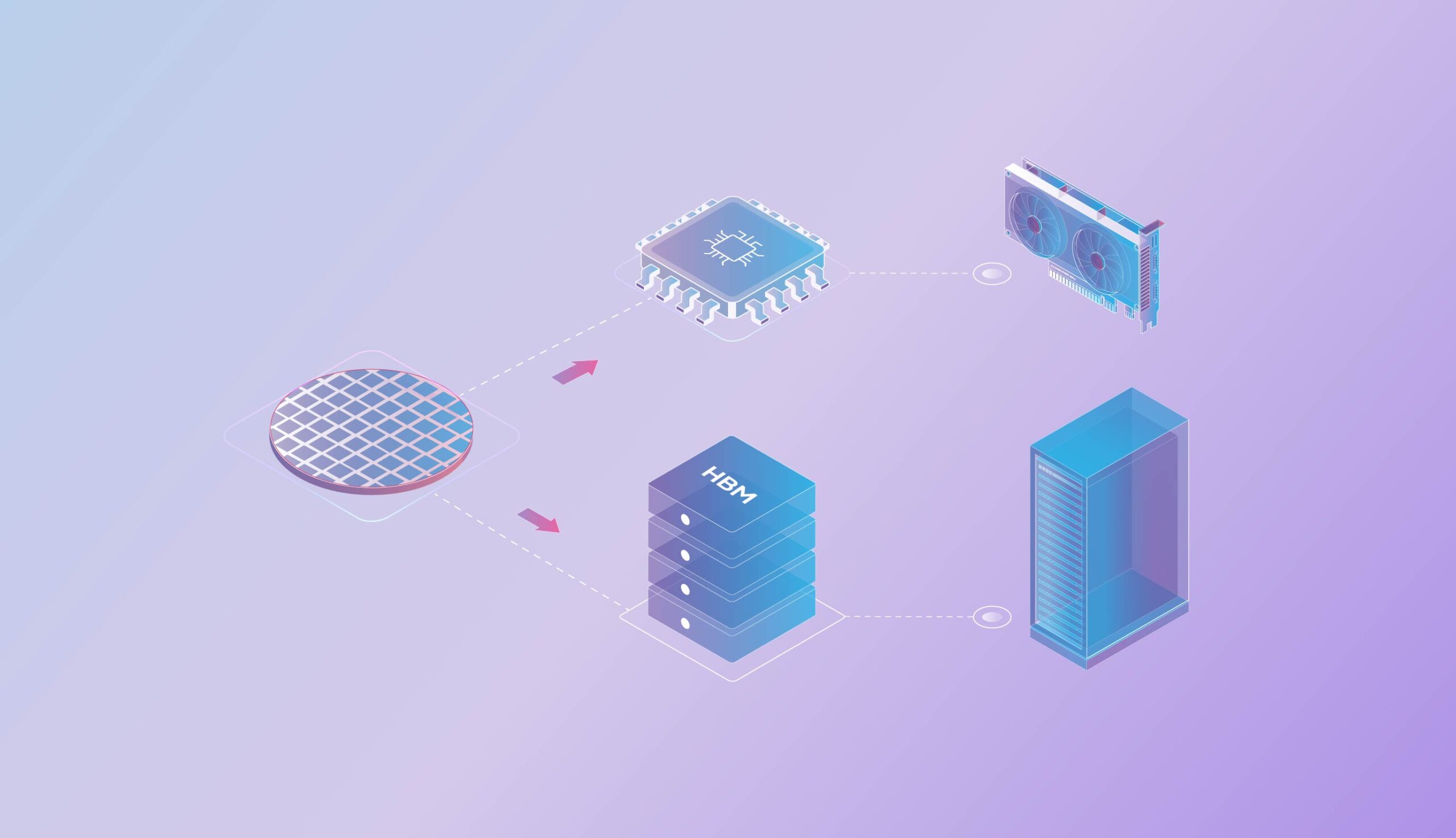
Data-center GPU lead times now run 36 to 52 weeks and prices keep climbing. We break down how the HBM shift at Samsung, SK Hynix, and Micron is reshaping GPU costs, and why enterprises are rethinking owning versus accessing compute.